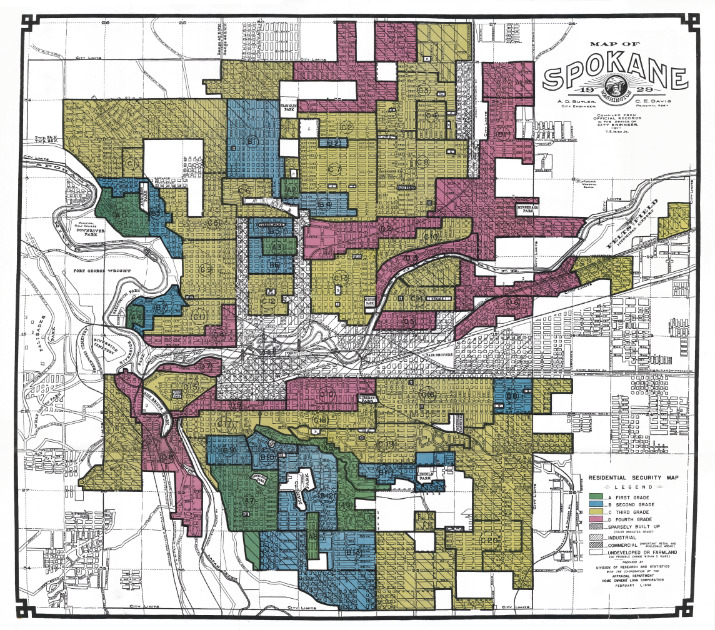
Redlining, a system that ranked neighborhoods based largely on race, significantly shaped the development of northeast Spokane, setting it apart from more affluent areas of the city.
This 1929 Redlining Map of Spokane by the Federal Housing Administration (FHA), which classified Hillyard as “hazardous,” was leveraged to create racial covenants in Spokane neighborhoods.
Racial covenants, which explicitly prohibited non-white residents from purchasing or occupying property, were enforced in many of Spokane’s most desirable neighborhoods through the 1950s. Non-white homebuyers were forced into poorer areas, as real estate agents refused sales and banks denied loans due to redlining. These covenants perpetuated cycles of poverty and exclusion in economically disadvantaged neighborhoods.
Spokane’s northeast and East Central neighborhoods are marked by the repercussions of redlining and racial covenants. Although unenforceable today, racial covenants remain on Spokane property documents, highlighting the systemic barriers shaping the city’s socio-economic history. The Washington State Racial Restrictive Covenants Project by the University of Washington documents these covenants, shedding light on their detriment on housing inequity.