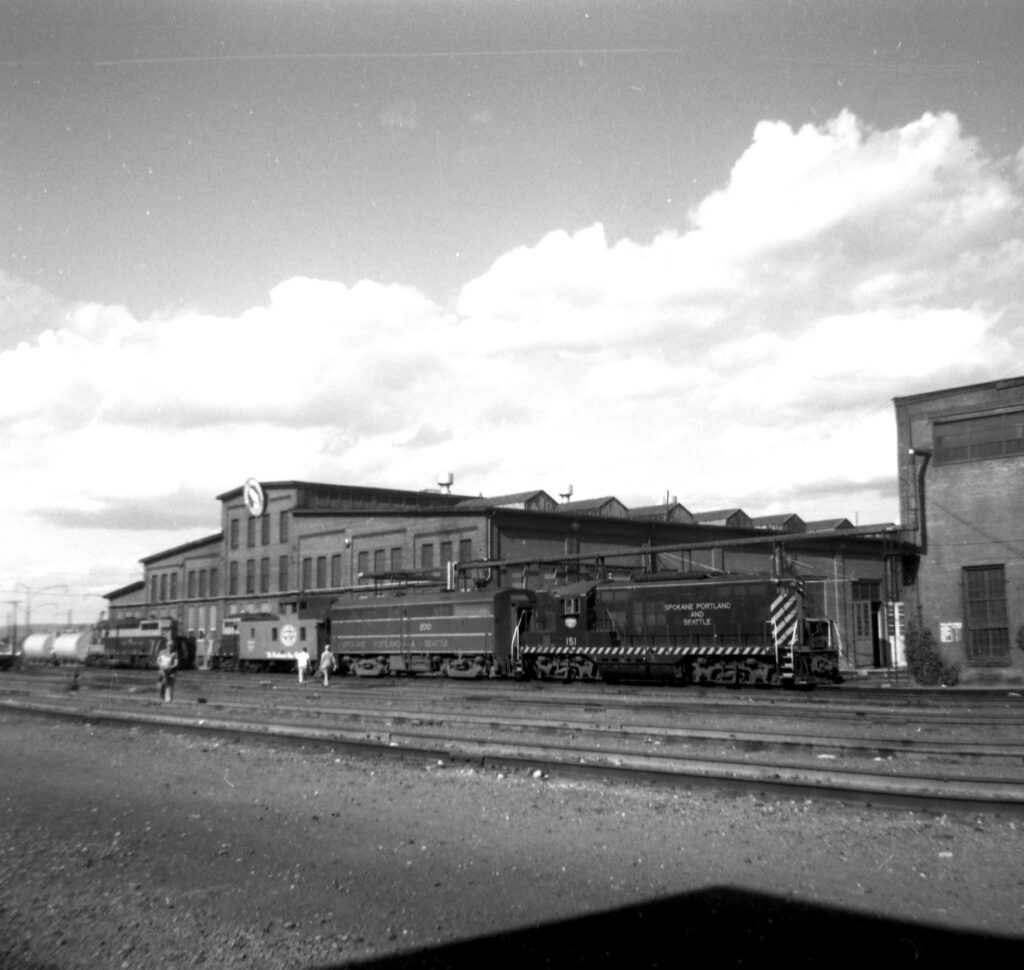
The Hillyard neighborhood, once a bustling hub for the Great Northern Railroad, faced significant decline following the closure of the railroad yard.
For nearly a century, Hillyard thrived on its industrial roots, with the railroad providing stable jobs and supporting local businesses. In the 1960s, however, advancements in diesel technology led to the replacement of steam engines. Demand for the services that had sustained Hillyard’s economy dropped.
Then, in 1968, the Northern Pacific, Great Northern, and the Chicago, Burlington & Quincy Railroads merged to form Burlington Northern. As operations consolidated, jobs shifted to other locations.
The closure of the Great Northern Railroad yard led to a sharp economic downturn in Hillyard, marked by increased poverty and crime rates. Further complicating matters, the abandoned rail yards contained bulk contaminants — petroleum, lead, and solvents — which leached into the Spokane Valley-Rathdrum Prairie Aquifer, posing health risks and hindering efforts of redevelopment.
After the railroad shut down, locals attempted to turn Hillyard into a tourist attraction focused on its railroad history, but high costs made their efforts unsustainable. Finally, in 2004, the Hillyard Railroad Heritage Museum was established, providing a way to preserve and celebrate the railroad’s legacy.