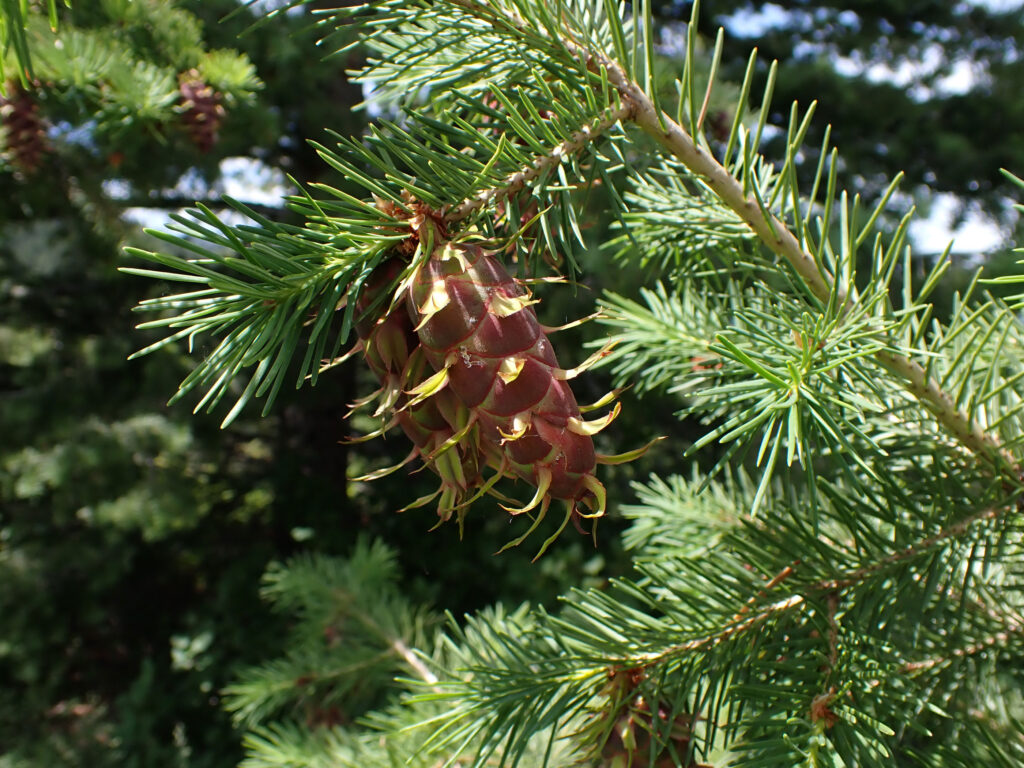
Pseudotsuga menziesii
Spokane Salish: Tsk'ilhp
Highly adaptable, the Douglas fir can withstand cold temperatures, retain water during droughts, and protect itself from fire due to its thick bark. Douglas fir grow throughout this region, from moist high elevation forests to dry rocky slopes.
The Spokane tribe historically used the tree for various purposes:
- The sweet, crystalline sap was collected during the hottest part of the summer and eaten on the spot or used it to sweeten lichen.
- The cambium from Douglas fir and other conifers pines was used to supplement the food supply during a famine year.
- The wood was used to make teepee poles, fishing nets, and spears.
- The boughs were used for temporary shelter and bedding. They were also placed on sweathouse floors and scrubbed on the body during sweat baths.
- The pitch from the tree helped with toothaches when applied to abscessed teeth.
- The needles were used to steep tea that could treat morning sickness and anemia.
Today, some Salish tribes still collect new spring tips to eat or preserve for later use. High in Vitamin C and electrolytes, these needles can boost immunity and are easily added to pesto or sauces, infused into honey or vinegar, or made into tea.