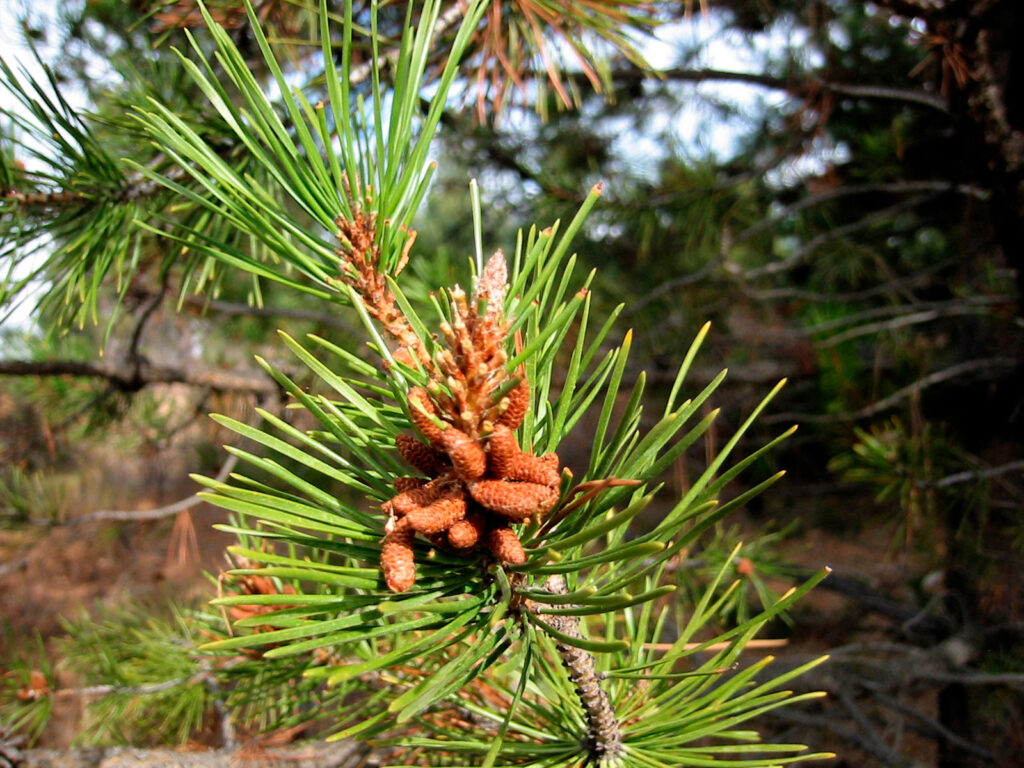
Pinus contorta
Spokane Salish: Qoqo'li't, other translations: kwekweii7t, kpagpaglekw
- Lodgepole Pine in Spokane Salish
Native tribes throughout our region used the trunks of the lodgepole pine as poles for homes, buildings, and especially teepees – just as the common name suggests. The Latin name is derived from the West Coast, where the tree grows among the beach dunes and gets twisted or contoured by the wind.
The Spokane and other area tribes collected the cambium, or inner bark, of lodgepole in June, following the ripening of ponderosa pine cambium. Traditionally, the Spokane scraped off long ribbons or “noodles” of cambium with a deer-rib scraper. Though not as popular as ponderosa cambium, the sweet and succulent cambium was eaten fresh in spring, sometimes alongside other spring roots and leaves.
Tribes also used the cambium and sap medicinally to treat ulcers. The pitch functioned as a base for many medicines. When boiled with animal fat, it could be made into a poultice to soothe sore muscles and aches. The young needle tips tops could be steeped into tea to treat body aches that accompany damp spring weather.