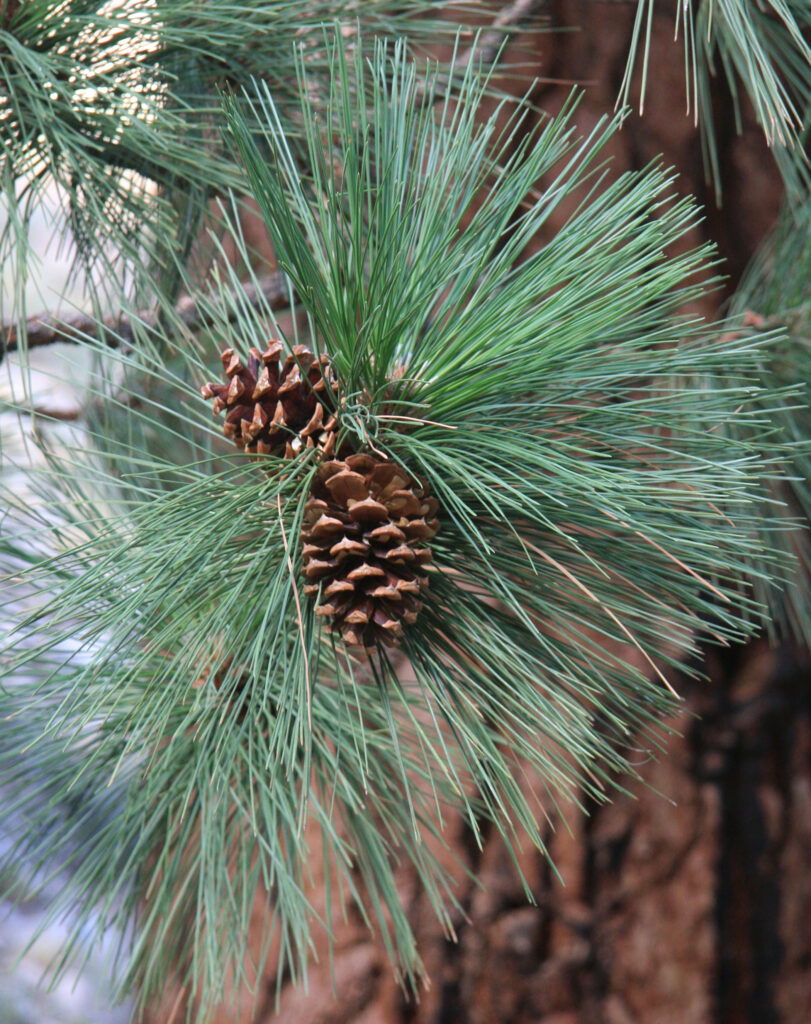
Pinus ponderosa
Spokane Salish: ‘yatqwelp, s7atkwlhp
Ponderosa pine, a large coniferous tree with a long taproot, is capable of growing in cold weather and in a range of moisture conditions. Ponderosas dominate dry valley bottoms and lowland forests but also grow at higher elevations or in wetter areas, providing habitat for a wide array of wildlife.
Like other pines, the cambium, or inner bark of the tree, is edible. Traditionally, Native peoples collected the cambium from young trees in the spring, before they collected lodgepole pine cambium. The cambium was eaten fresh, sometimes alongside other spring roots and shoots.
Ponderosa pine provide versatile medicines. The pitch can be used in a poultice for cuts, bruises, and infections, while the spring buds can be dried and steeped into tea for use as an eyewash for sore or infected eyes. Some tribes boiled the needles and drank the decoction to stop internal bleeding.
The tree had a variety of other traditional uses. The wood could be used to make dugout canoes and poles for structures, while the pitch was used to glue feathers onto arrow shafts or cover fish spears and to caulk and waterproof canoes. Logs served as the base of cooking pits, and needles were used for tinder.
Some people bult platforms in the trees; prior to being used for storage in the fall, they served as sleeping areas for people to stay cool on hot summer nights.
The Spokane understood the importance of ponderosa to both the natural environment and their human communities. With this understanding, they practiced forest silviculture and fire management to maintain the health of the forests.