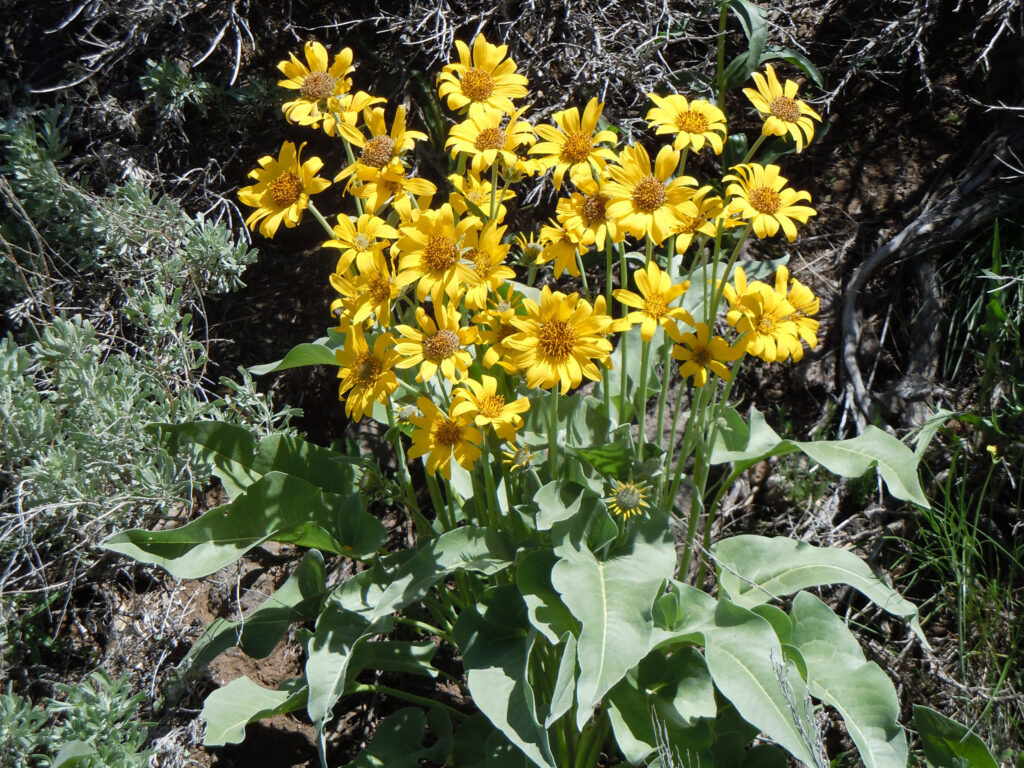
Balsamorhiza sagittata
Spokane Salish: smukwa'shn
A distinctive, long-lived member of the sunflower family, balsamroot inhabits the dry, well-drained slopes around Spokane. Like many plants, balsamroot provides the Spokane and other Interior Salish tribes with both food and medicine.
- The shoots can be peeled and eaten raw or cooked with lomatium roots. In early spring, Spokane women traditionally gathered the shoots as part of a “first foods” ceremony.
- The seeds can be dried, ground, and mixed with animal fat or added to soup. In the fall, the Spokane collect the nutritious and oil-rich seeds, which resemble small sunflower seeds.
- The stems and leaves are used medicinally to treat rheumatism, sprains, stomach pains, and colds. The leaves are mixed with kinnikinnick and sometimes substituted for tobacco. The dried and powdered leaves are used topically to heal burns and the resinous root are used to treat sores and boils. Likewise, a poultice of pounded or chewed root paste could treat arrow or gunshot wounds or hemorrhages.
- The Spokane also stuffed the leaves into moccasins to keep children’s feet warm in the winter.