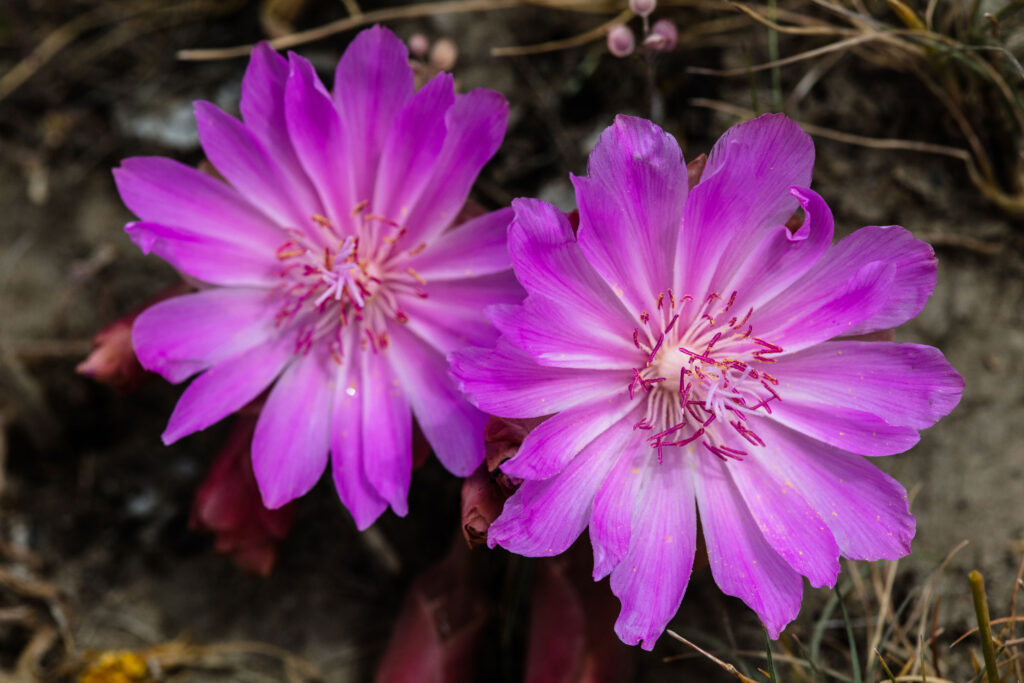
Lewisia rediviva
Spokane Salish: Speƛ’m or Sp'it'em
Significant to many tribes, including the Spokane, the iconic bitterroot grows in sandy or gravelly soils. The emergence of its succulent bright green leaves in early spring signals that the roots are ready for harvest, making it one of the first foods for many tribes. A few weeks later, bitterroot blooms into a beautiful flower with many petals. The flowers range in color from pink to white to purple.
The Salish, Nez Perce, and other tribes maintain grounds for collecting bitterroot throughout their traditional territories. Locations are selected based on the quality of bitterroot they produce. Historically, the Spokane often traded the highly valued roots to other tribes for various items.
Traditionally dug by women, the carbohydrate-rich roots are washed, laid out to dry, and cooked by steaming, boiling, or in dugout pits. Bitterroot is often cooked with other foods – like lomatium roots, gooseberries, or serviceberries – or dried and stored for later use.
Although bitterroot is most celebrated as a vital food source that marked winter’s end, it is also used medicinally. The raw shoots may be eaten to treat indigestion. Other Interior Salish tribes apply the plant topically for sores and ingest it as a cure for maladies ranging from poison ivy to diabetes.