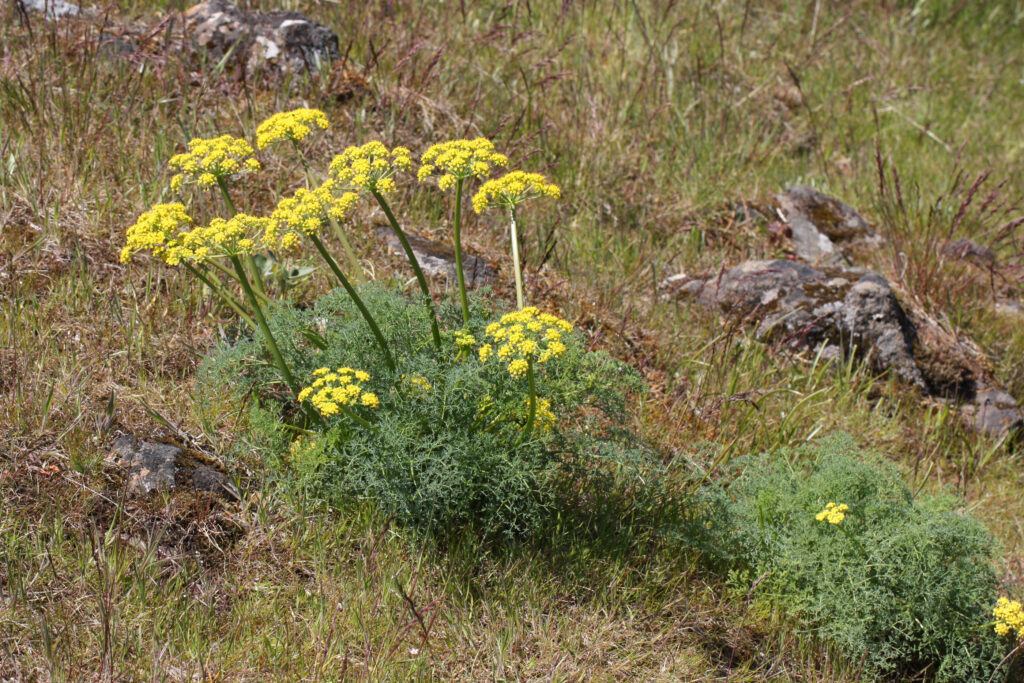
Lomatium spp.
Spokane Salish: p'ekhwp'ukhw
A member of the carrot family, lomatium grows in dry, rocky areas. The flower forms an umbel (umbrella-shape) and can range in color from white to yellow to purple. Many species have fern-like leaves at the base of the plant.
Lomatium has served as a staple food source for Interior Salish tribe. Its shoots, traditionally dug by women, are one of the first foods to come up in the spring. The Spokane used the roots of two varieties in particular: Lomatium canbyi, or “white camas,” and Lomatium cous, or simply “cous.”
Across the Columbia Plateau, women from many tribes travelled to gathering grounds to camp and dig lomatium roots for days at a time. At their camps, the women then pit-cooked the roots and ate them immediately or dried and stored them for later use. They used storytelling and socializing to help break up the monotony and labor of digging and cooking the roots.
Several other species of lomatium served as medicine. Lomatium dissectum, or “chocolate tips,” was prepared as root tea to treat tuberculosis, arthritis, and to bring about lactation. Dried roots of Lomatium macrocarpum, or “desert parsley,” were soaked and chewed to relieve cold, flu, and bronchitis symptoms. Both varieties were made into a poultice to treat cuts, sores, and boils. Other species of lomatium were used to treat colds, distemper, and lice in horses.