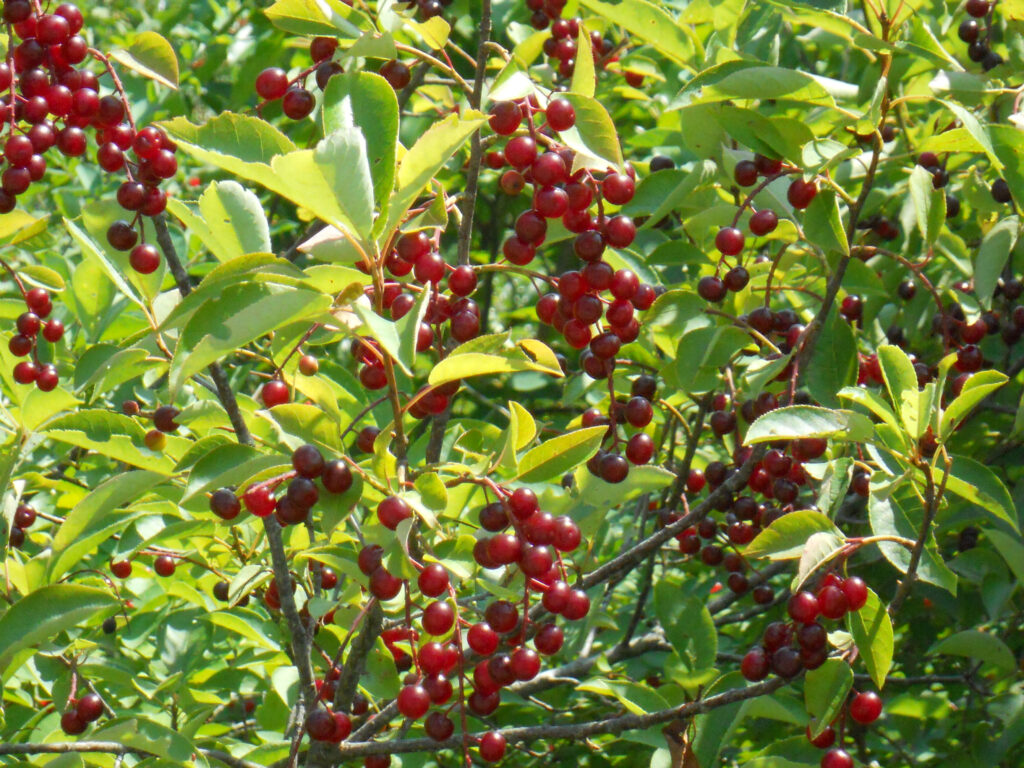
Prunus virginiana
Spokane Salish: łaqhwłuqhw
Appearing as a large bush or small tree, chokecherry forms attractive plumes of white flowers in the spring. By mid-summer, the flowers produce small red or black cherries. Many tribes throughout the region prized chokecherry as a staple food; it was their most important fruit and source of antioxidants.
While the fruit can be consumed fresh, women traditionally ground the cherries – pits and all – and then sun dried them for later consumption. Eaten year-round, the cherries were stored by many households in large quantities. Dried chokecherries were often mixed with meat and fat to make pemmican.
Chokecherry also has medicinal properties. The Spokane made tea from the branches to ease the symptoms of morning sickness. And the bark of chokecherry can help treat colds, fever, and stomach maladies.
Traditionally, the ripening of the chokecherries was an indication that spring salmon were coming up the Spokane River to spawn.