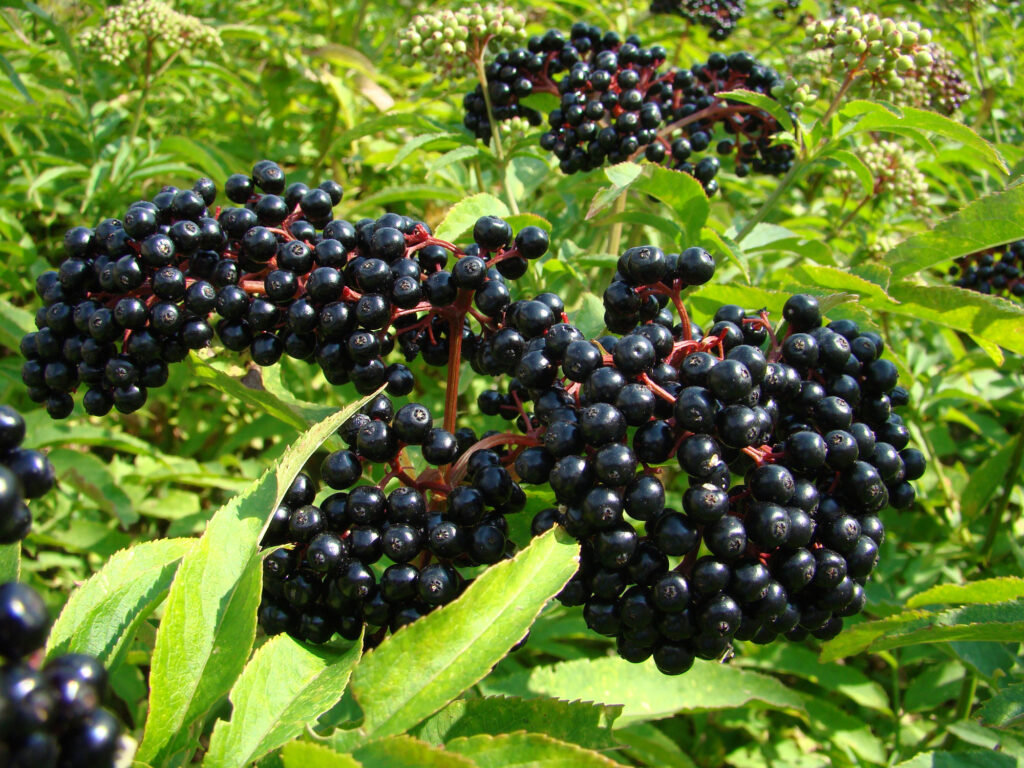
Sambucus cerulea aka S. glauca
Spokane Salish: ćkwíkw
- Elderberry in Spokane Salish
Appearing as a large shrub or small tree, elderberry typically grows near streams. The Spokane have traditionally used the berries, bark, and wood from the blue elderberry. Like chokecherry, elderberry has both food and medicinal purposes.
After gathering elderberry in late summer and early fall, people typically dried or cooked the berries before consumption. Traditionally, the Spokane sun-dried or smoke-dried whole berries or stored them to boil and eat during the winter
Blue elderberry has several medicinal properties. Tea can be made from the berries and imbibed or applied externally to reduce fevers. Historically, Native peoples would soak the bark in hot water and apply it to the skin to heal boils. Boiled crushed elderberry seeds were used topically to stop bleeding and infection in humans and horses.
The wood was also useful. People fashioned larger pieces of elderberry wood into dip nets and fishing hooks, snowshoes, and flutes. Elderberry stems were treated as tubes to inflate animal intestines, which were then used for food storage. Dried branches could be used in the final stages of tanning to give a hide a deep, tan color.