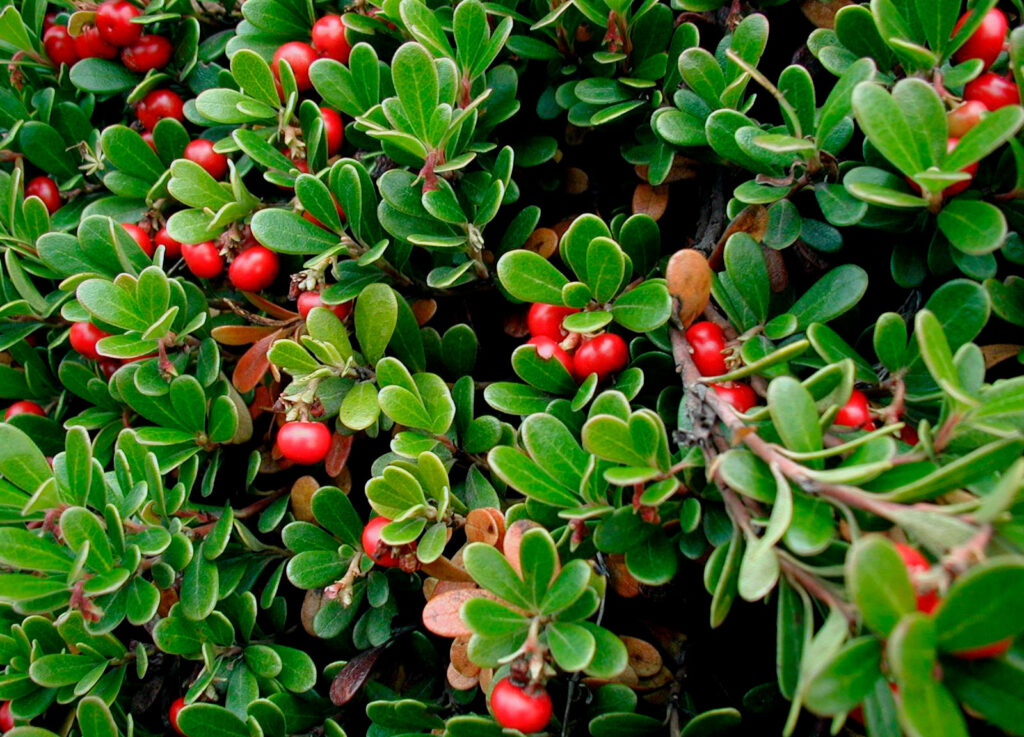
Arctostaphylos uva-ursi
Spokane Salish: skweisiIhmeix (whole plant) Skwlis (berries)
- Kinnikinnick Berry in Spokane Salish
A trailing, creeping evergreen shrub with long rooting branches, kinnikinnick often forms large mats. Its small, pinkish-white flowers develop into bright red berries that contrast with dark green shiny leaves. The plant is common in nearly every forest type, from rocky slopes to alpine clearings.
Kinnikinnick berries are also called “bearberry” because they stay ripe through winter and provide food for wildlife like bears and birds, as well as humans. Many tribes mixed kinnikinnick – the last berries gathered before winter – with other berries or stored them for later use in soups and stews.
Many tribes in North America, including the Spokane, used kinnikinnick in a smoking blend with indigenous tobacco, grasses, and wild licorice. This blend was typically smoked on ritual occasions.
The leaves also have multiple medicinal qualities. Thanks to their astringent properties, the leaves and berries can be chewed to treat tooth pain. The crushed leaves can be applied to soothe burns or to stop bleeding or infused into tea to treat diarrhea and infections of the urinary tract, bladder, and kidneys. The Spokane also used the leaves in a tea to ease colds and sore throats.